A fibular approach
In the method described by Response Ortho®, two complete cuts through the distal third of the fibular shaft isolate an approximately 5 cm segment. The entire segment is transported transversely; it is not a small cortical window. The surgeon determines the actual location, dimensions and treatment plan.
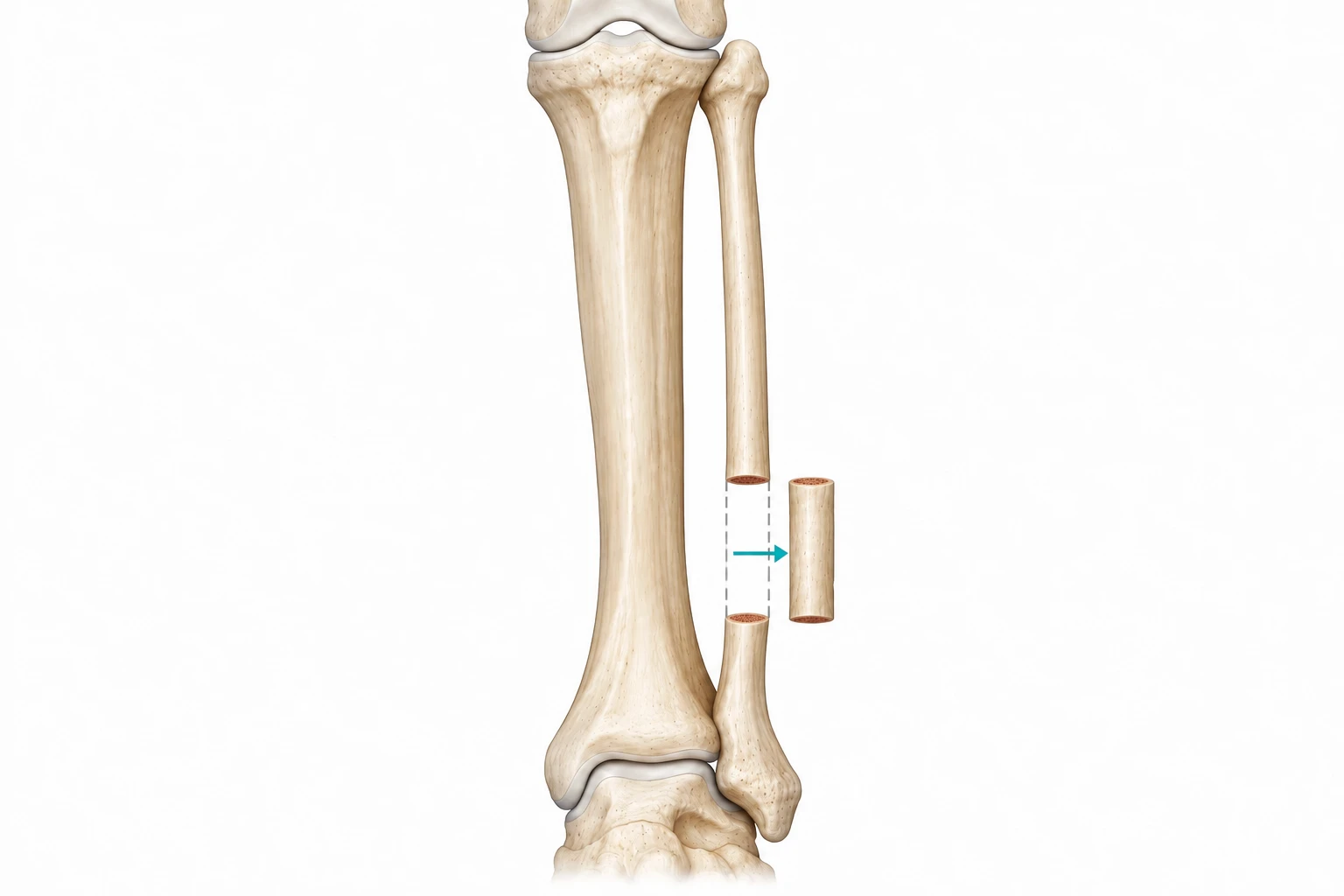
What the fibular approach aims to offer
FTT explores a different site for controlled transport: the fibula rather than the main load-bearing tibia. The design aims to leave the tibial cortex outside the transport site while applying the tension–stress principle with the same biological goal of supporting small-vessel responses. Preserving the tibial transport site and using a less heavily loaded bone are design considerations; patient benefits such as fewer fractures, earlier walking or better healing require clinical evaluation.
Patent status and clinical evidence
Response Ortho® identifies the method as patent pending. A patent application describes an invention; it does not establish clinical safety, effectiveness or regulatory authorization. TTT studies do not automatically validate FTT.
Fibular loading and fracture risk
Takebe and colleagues studied loading in autopsy specimens. With the ankle neutral, the fibula carried 6.4% of the measured load; loading changed with ankle position and load direction. This supports a biomechanical rationale for considering the fibula, but does not demonstrate that FTT reduces fractures compared with TTT. Fracture risk cannot be eliminated on this basis, and weight-bearing instructions remain individual.
Risks that need an individual discussion
Complete fibular cuts and transport can involve risks to nearby nerves and blood vessels, pin-site infection and problems with bone healing. Effects on stability depend on the location and construct. Lower fibular loading does not remove these risks. Ask your surgeon which risks apply to the proposed method.
Questions for your specialist
Ask about evidence specific to FTT, applicable regulatory requirements, alternatives, risks and follow-up. Ask how the proposed fibular approach may affect your care plan and what is known about its outcomes.
Technical description: Response Ortho® bone transport device and method patent materials supplied by the manufacturer. Filing details and market-specific use require confirmation before publication.